This lemon vinaigrette dressing transforms everyday salads into restaurant-quality dishes with just six simple ingredients. I’ve perfected this lemon vinaigrette dressing over years of testing, and it’s become my go-to for everything from crisp greens to roasted vegetables. The bright citrus notes balance perfectly with quality olive oil, creating a versatile dressing that keeps for weeks.
SERVES: 4 | PREP: 5 MIN | COOK: 0 MIN | TOTAL: 5 MIN
Ingredients
Base Ingredients
| Ingredient | Amount | Notes |
|---|---|---|
| Fresh lemon juice | ¼ cup | 2 medium lemons |
| Extra virgin olive oil | ½ cup | Best quality you have |
| Dijon mustard | 1 tablespoon | Room temperature |
| Honey | 1 teaspoon | Or maple syrup |
| Garlic | 1 clove | Minced fine |
| Sea salt | ½ teaspoon | Adjust to taste |
| Black pepper | ¼ teaspoon | Freshly ground |
Step-by-Step Instructions
Preparation Phase (2 minutes)
Step 1: Roll your lemons firmly on the counter for about 10 seconds each. This breaks down the internal membranes and releases more juice. You’ll get nearly double the juice compared to unrolled lemons.
Step 2: Cut the lemons in half and squeeze them into a fine-mesh strainer positioned over a small bowl. The strainer catches seeds and pulp while letting the juice through. You need exactly ¼ cup of fresh juice—this usually takes 2 medium lemons.
Step 3: Peel your garlic clove and mince it as finely as possible. I like to sprinkle a tiny pinch of salt on the garlic while mincing—it acts like sandpaper and creates a smoother paste. This prevents chunks of raw garlic in your finished dressing.
Emulsification Phase (3 minutes)
Step 4: Add the ¼ cup lemon juice, 1 tablespoon Dijon mustard, and 1 teaspoon honey to a pint-sized mason jar. The mustard is crucial here—it contains natural emulsifiers that help the oil and acid blend together instead of separating.
Step 5: Add your minced garlic, ½ teaspoon salt, and ¼ teaspoon black pepper to the jar. Salt enhances all the flavors, while pepper adds a subtle heat that complements the lemon’s brightness.
Step 6: Secure the lid tightly and shake vigorously for 20 seconds. You’ll hear the ingredients sloshing around—this is good. You’re breaking down the mustard and distributing the seasonings evenly through the acidic base.
Step 7: Remove the lid and slowly pour in ½ cup extra virgin olive oil. Don’t add it all at once. The gradual addition is important for proper emulsification. I usually pour about a third, replace the lid, shake, then repeat twice more.
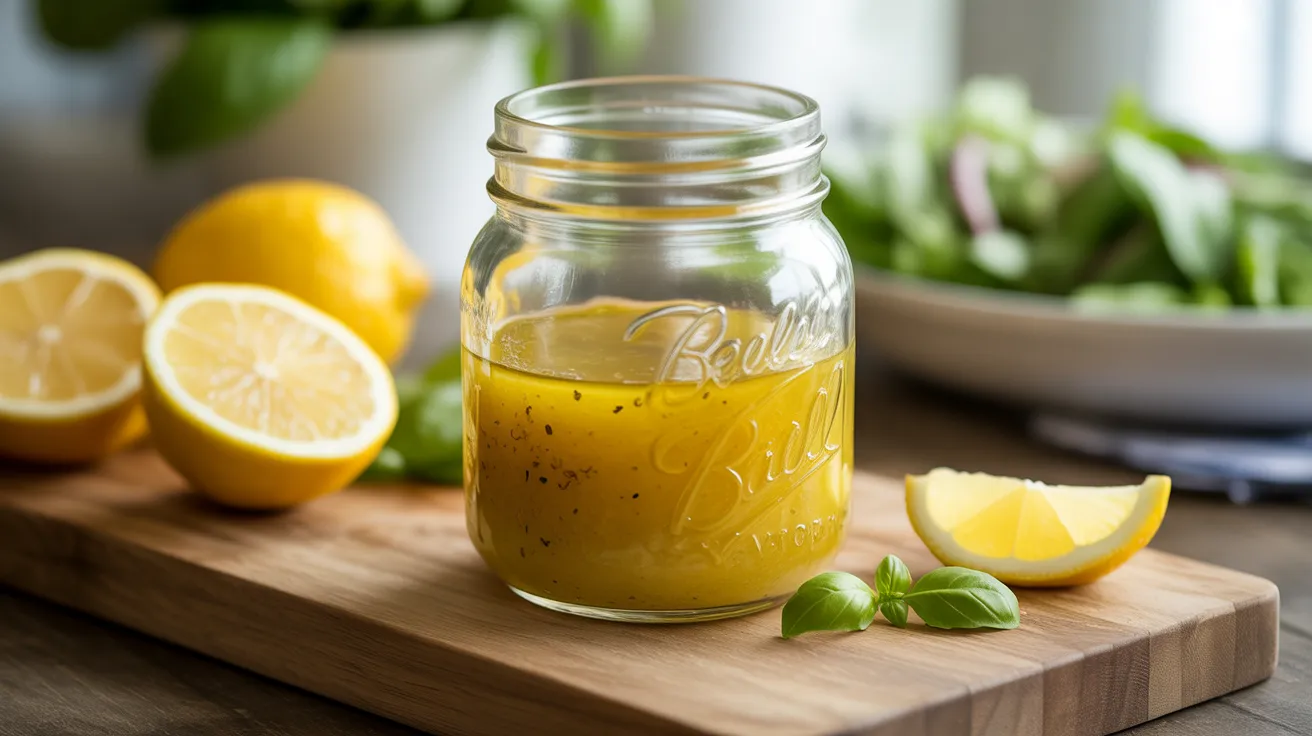
Step 8: After adding all the oil, shake the jar vigorously for a full 30 seconds. Your arm might get tired, but this extended shaking creates a creamy, thick emulsion. The dressing should look pale yellow and slightly cloudy when properly emulsified.
Step 9: Open the jar and taste the dressing with a clean spoon. This is your chance to adjust the balance. Too tart? Add another ½ teaspoon honey. Not bright enough? Squeeze in more lemon juice, 1 teaspoon at a time. Too thick? Whisk in 1 tablespoon water.
Quality Check Phase (1 minute)
Step 10: Look at the texture. A properly made lemon vinaigrette dressing should coat the back of a spoon in a thin, even layer. If it’s too runny, shake it for another 20 seconds. If it’s too thick, add water 1 teaspoon at a time.
Step 11: Smell the dressing before using. You should catch bright lemon notes first, followed by a peppery olive oil aroma. If you smell mostly garlic, you’ve added too much—balance it with an extra tablespoon of both lemon juice and oil.
Step 12: Store the dressing in the sealed jar in your refrigerator immediately if not using right away. The acid in the lemon juice will soften the raw garlic over time, mellowing its punch while developing more complex flavors.
Chef’s Notes
Lemon Quality Matters: Always use fresh-squeezed lemon juice for this lemon vinaigrette dressing. Bottled lemon juice contains preservatives that create a bitter, chemical aftertaste. Fresh lemons give you bright, clean citrus flavor.
Oil Temperature: Cold olive oil from the refrigerator won’t emulsify properly. Let your oil sit at room temperature for 30 minutes before making the dressing. The warmer oil blends more easily with the lemon juice.
Shake Before Each Use: Oil and acid naturally separate after sitting. Give your jar a good 10-second shake before each use to re-emulsify the ingredients. This ensures consistent flavor in every serving.
Garlic Intensity: Raw garlic gets stronger as it sits in acid. If you’re making this dressing more than 2 hours ahead, reduce the garlic to half a clove. The flavor will intensify to a full clove’s worth as it marinates.
Nutrition Information (Per 2 Tablespoon Serving)
- Calories: 185
- Total Fat: 20g
- Saturated Fat: 3g
- Sodium: 145mg
- Total Carbohydrates: 2g
- Sugars: 1g
- Protein: 0g
Creative Variations
Herb Garden Lemon Dressing: Chop 2 tablespoons fresh herbs (basil, parsley, or dill work beautifully) and add them to the jar before the final shake. The herbs add color and earthy notes that complement the citrus. This version pairs perfectly with tomato salads.
Creamy Lemon Dressing: Replace 2 tablespoons of the olive oil with my homemade mayonnaise recipe for a richer, creamier texture. The mayonnaise adds body and makes the dressing cling better to sturdy greens like romaine or kale.
Shallot Lemon Vinaigrette: Swap the garlic for 2 tablespoons minced shallot. Shallots provide a sweeter, more delicate onion flavor that’s less aggressive than garlic. This variation is elegant enough for dinner parties and special occasions.
Balsamic-Lemon Fusion: Use 2 tablespoons lemon juice plus 2 tablespoons from my balsamic vinaigrette recipe. The balsamic adds depth and sweetness while the lemon keeps it bright. This combination works beautifully on roasted vegetable salads.
Storage & Reheating
Store your lemon vinaigrette dressing in an airtight glass jar in the refrigerator for up to 2 weeks. The acid in the lemon juice acts as a natural preservative, keeping the dressing fresh longer than cream-based options.
The olive oil will solidify in cold temperatures, making the dressing thick and cloudy. This is completely normal. Remove the jar from the refrigerator 15 minutes before using and let it sit on the counter. The oil will return to liquid form.
If you’re in a hurry, run warm (not hot) water over the sealed jar for 30 seconds. Gentle heat liquefies the oil quickly without cooking the ingredients or breaking the emulsion.
Never microwave the dressing to soften it. The heat will cook the raw garlic, creating a bitter flavor and destroying the fresh citrus brightness that makes this dressing special.
For meal prep, portion the dressing into smaller 4-ounce jars. Each jar holds about 4 servings, perfect for one person’s weekly salads. The smaller containers warm up faster when you need them.
Troubleshooting Common Problems
My dressing won’t emulsify and stays separated: The oil was too cold or you didn’t shake long enough. Pour the mixture into a blender and blend on high for 30 seconds. The mechanical action will force the emulsion. For future batches, ensure your oil is at room temperature and shake vigorously for at least 30 seconds.
The dressing tastes too acidic and makes my mouth pucker: You’ve added too much lemon juice or not enough oil to balance it. Add olive oil 1 tablespoon at a time, shaking well after each addition, until the tartness mellows. You can also add an extra ½ teaspoon honey to round out the sharp edges.
There are chunks of garlic floating in my dressing: Your garlic wasn’t minced finely enough. Pour the dressing through a fine-mesh strainer to remove the chunks, then add ¼ teaspoon garlic powder for even distribution. Next time, mince the garlic into a paste or use a garlic press.
The dressing solidified into a gel in my refrigerator: You used olive oil with a very high monounsaturated fat content—this happens with premium oils. It’s not spoiled. Let it sit at room temperature for 20 minutes and shake well. Consider blending in 2 tablespoons of a neutral oil like grapeseed to prevent future solidification.
My lemon vinaigrette dressing tastes bitter: Old or overheated olive oil turns bitter, or you’ve included too much lemon pith. Taste your olive oil separately—if it’s bitter, replace it with fresh oil. If the oil is fine, the bitterness is from pith. Strain the dressing and start fresh, being careful to squeeze only the flesh of the lemon.
Equipment Essentials
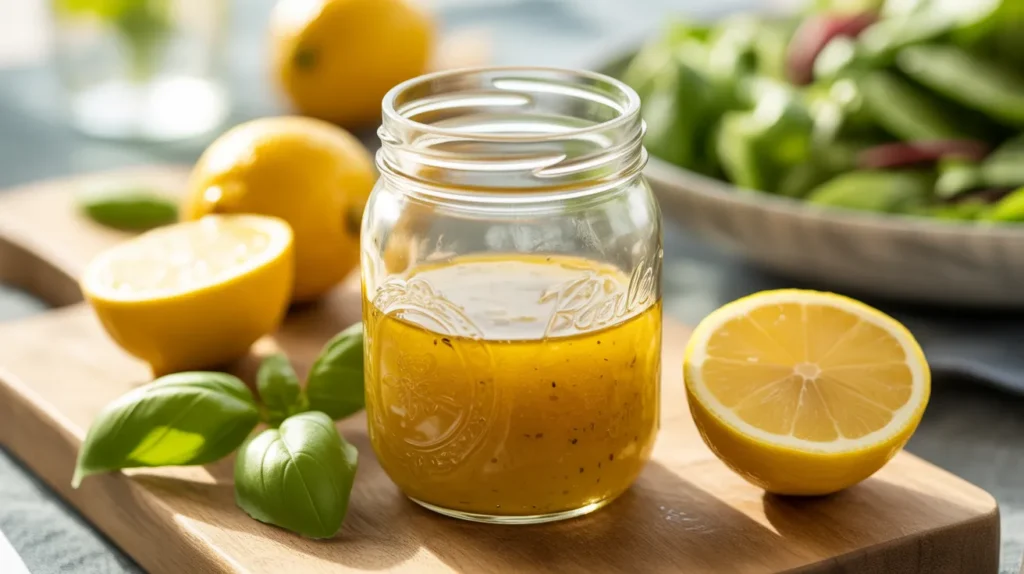
You’ll need a pint-sized mason jar with a tight-fitting lid for mixing and storing. The jar method is easier than whisking and gives you a storage container in one step.
A fine-mesh strainer catches lemon seeds and pulp while letting the juice flow through freely. This prevents texture issues in your finished dressing.
Keep a citrus juicer or reamer handy for maximum juice extraction. Manual or electric both work—just avoid getting seeds in your juice.
A microplane or fine grater gives you perfectly minced garlic with minimal effort. The ultra-fine texture distributes evenly through the dressing.
Use measuring spoons and a liquid measuring cup for accuracy. Eyeballing measurements leads to inconsistent results and unbalanced flavors.
Shopping List
Produce Section
- Lemons (2 medium)
- Garlic (1 head—you only need 1 clove)
Condiment Aisle
- Dijon mustard
- Honey
Oil & Vinegar Section
- Extra virgin olive oil (best quality)
Spice Aisle
- Sea salt (if not already stocked)
- Black peppercorns (for grinding fresh)
Success Secrets
1. Temperature Control: Room temperature ingredients emulsify better than cold ones. Take your olive oil, mustard, and even honey out of the refrigerator 30 minutes before mixing. The warmer temperatures help the oil molecules suspend evenly in the lemon juice.
2. The Mustard Trick: Dijon mustard contains lecithin, a natural emulsifier that keeps oil and acid from separating. Never skip it. Even if you don’t like mustard’s flavor, 1 tablespoon provides emulsification without tasting mustardy in the final dressing.
3. Shake in Stages: Add the oil in three separate additions rather than all at once. Pour a third of the oil, shake for 10 seconds, then repeat twice. This gradual incorporation creates a more stable emulsion that resists breaking.
4. Taste and Adjust: Every lemon has different acidity levels. Meyer lemons are sweeter, while Eureka lemons are more tart. Always taste your finished dressing and adjust with honey (for sweetness), salt (for savory depth), or more oil (to mellow tartness).
5. The Spoon Test: Dip a clean spoon into your dressing and lift it out. The dressing should coat the spoon in a thin, even layer that slowly drips off. Too thick means more water; too thin means more shaking or an extra teaspoon of mustard.