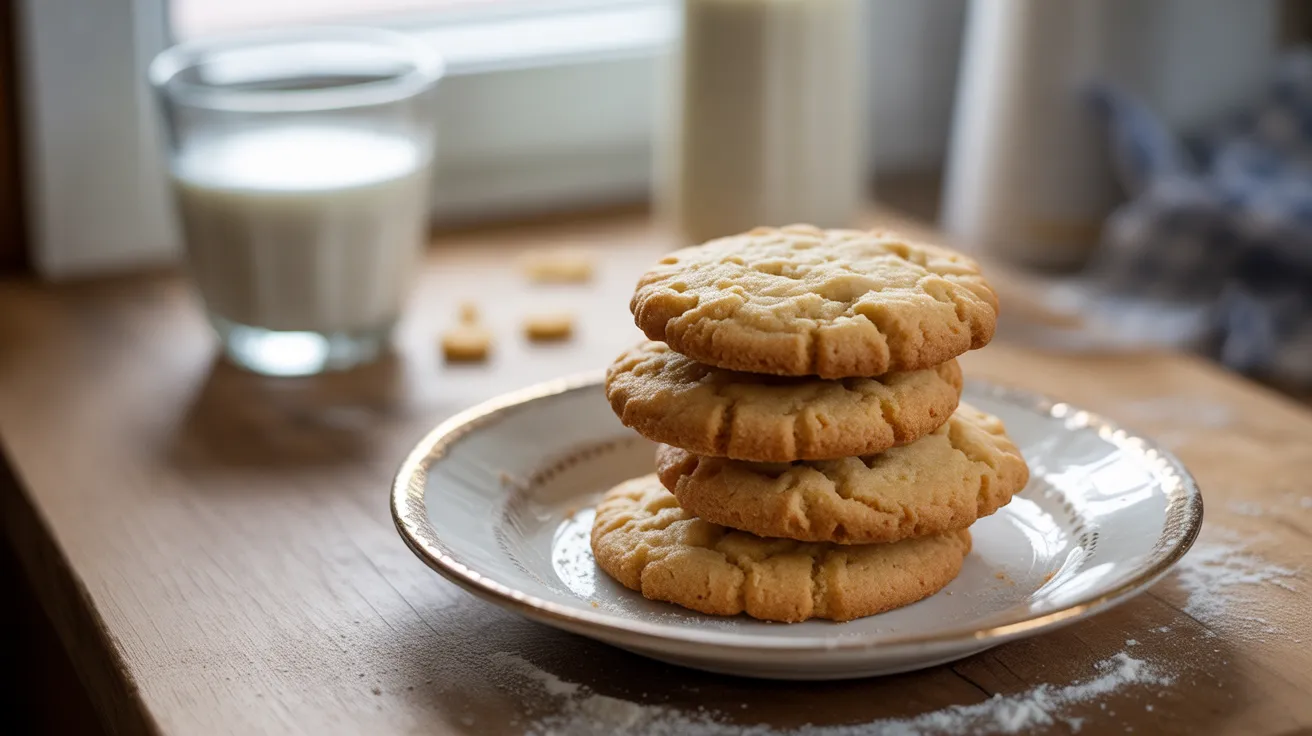
There’s nothing quite like a fresh batch of sugar cookies cooling on the counter. This sugar cookie recipe has been my go-to for years, and once you try it, you’ll understand why. Whether you’re baking for a holiday, a birthday, or just because you’re craving something sweet, this sugar cookie recipe walks you through every single step so even a first-time baker ends up with soft centers and lightly golden edges.
Recipe Info Bar
SERVES: 4 | PREP: 25 MIN | COOK: 10 MIN | TOTAL: 35 MIN
Ingredients
Dry Ingredients
| Ingredient | Amount |
|---|---|
| All-purpose flour | 1 ½ cups |
| Baking powder | ½ tsp |
| Salt | ¼ tsp |
Wet Ingredients
| Ingredient | Amount |
|---|---|
| Unsalted butter, softened | ½ cup (1 stick) |
| Granulated sugar | ½ cup |
| Egg | 1 large |
| Vanilla extract | 1 tsp |
For Topping (Optional)
| Ingredient | Amount |
|---|---|
| Coarse or granulated sugar | 2 tbsp |
This batch makes about 12 cookies — 3 cookies per serving.
Step-by-Step Instructions
Phase 1: Get Everything Ready
- Take your butter out of the fridge 30 minutes before you plan to bake. Press it with your finger — it should dent easily but not feel greasy or shiny. If it’s still hard, your dough won’t mix smoothly.
- Preheat your oven to 350°F. Let it run for a full 10-15 minutes after it beeps “ready” — most home ovens read hotter than they actually are, and an underheated oven is a top reason cookies turn out flat.
- Line a baking sheet with parchment paper. This stops the bottoms from over-browning and means no scrubbing later.
- Set out your measuring cups, a medium bowl, and a large bowl so you’re not searching mid-recipe.
Phase 2: Mix the Dough
- In the medium bowl, whisk together the flour, baking powder, and salt. Whisking (not just stirring) spreads the baking powder evenly so you don’t end up with one puffy cookie and one flat one. Set this bowl aside.
- In the large bowl, add the softened butter and sugar. Beat with a hand mixer on medium speed (or a wooden spoon, if mixing by hand) for 2 full minutes. Stop and check — the mixture should look noticeably lighter in color and fluffy, almost like frosting. This is what gives the cookies a tender bite, so don’t rush it.
- Crack in the egg and add the vanilla extract. Mix for another 30 seconds, until you can’t see any streaks of egg and the batter looks smooth and glossy.
- Add the flour mixture to the butter mixture in two additions, mixing gently after each. Stop mixing the moment the flour disappears — you should still see a slightly shaggy, soft dough. Overmixing at this stage is the #1 reason sugar cookies turn out tough instead of tender.
Phase 3: Shape the Dough
- Using a tablespoon or small cookie scoop, portion the dough into pieces of about 2 tablespoons each. You should get roughly 12 portions.
- Roll each portion between your palms into a smooth, crack-free ball. If the dough feels sticky and won’t hold a ball shape, pop the whole bowl in the fridge for 10-15 minutes — this makes a real difference for beginners.
- Set the dough balls on your prepared baking sheet, spacing them 2 inches apart. They’ll spread as they bake, so don’t crowd them.
- If you’re using the topping sugar, roll each ball in it now, before flattening.
- Gently press each ball down with the bottom of a flat glass (or the palm of your hand) until it’s about ½ inch thick. Pressing too thin makes crispy, spread-out cookies; too thick and the centers stay raw.
Phase 4: Bake
- Bake one tray at a time on the middle oven rack for 9-11 minutes. Set a timer for 9 minutes so you don’t overshoot.
- Look for the visual cue, not just the clock: the edges should look set and just barely turning golden, while the centers still look soft and slightly underdone. That soft center is normal — it firms up as the cookie cools.
- Avoid opening the oven door during the first 7 minutes of baking. A blast of cold air can make the cookies bake unevenly.
Phase 5: Cool and Finish
- Leave the cookies on the hot baking sheet for 5 minutes after they come out of the oven. They’re too soft to move right away and will fall apart if you try.
- Use a spatula to transfer them to a wire rack, and let them finish cooling for about 15 minutes before stacking, storing, or serving. Cookies moved too early can stick together or dent.
Chef’s Notes
- Room-temperature butter is non-negotiable. Cold butter won’t cream properly, and melted butter makes the dough greasy — both throw off this sugar cookie recipe.
- If your dough feels too soft to roll into balls, a short 10-minute chill solves it without changing the flavor at all.
- Want a thicker, bakery-style cookie? Chill the shaped, flattened dough balls for 30 minutes before baking — they’ll hold their shape better in the oven.
- A light dusting of flour on your hands keeps the dough from sticking to your fingers while you roll it.
Nutrition Information
Per serving (¼ of the recipe, about 3 cookies), calculated from the exact ingredient amounts above:
- Calories: 516
- Protein: 7g
- Carbohydrates: 67g
- Fat: 25g
Creative Variations
Want to switch things up? Here are four ways to change this sugar cookie recipe:
- Lemon Zest Cookies — Add 1 teaspoon of fresh lemon zest to the wet ingredients for a bright, citrusy version.
- Cinnamon Sugar Cookies — Roll the shaped dough in a mix of cinnamon and sugar instead of plain sugar before pressing it flat.
- Chocolate Chip Swap — Fold in ¼ cup mini chocolate chips for a hybrid cookie. It pairs well with this cookie recipe if you’re building a full dessert tray.
- Frosted Sugar Cookies — Once fully cooled, top with a simple vanilla glaze and sprinkles. For more sweets on the table, this brownie recipe makes a nice pairing.
Storage & Reheating
- Store cooled cookies in an airtight container at room temperature for up to 5 days.
- To freeze, arrange cooled cookies in a single layer on a tray, freeze until solid (about 2 hours), then move them to a freezer bag for up to 3 months.
- To bring back that just-baked softness, warm a cookie in the microwave for 8-10 seconds.
Troubleshooting
Cookies spread too flat Your butter was likely too soft or starting to melt, or the shaped dough sat out too long before baking. Chill the dough balls for 15-20 minutes before they go in the oven.
Cookies are dry or crumbly This usually means too much flour got packed into the measuring cup. Spoon flour into the cup and level it off with a knife instead of scooping straight from the bag.
Cookies didn’t spread at all Your oven may be running hot, or the dough was too cold going in. Let shaped dough rest at room temperature for 5 minutes before baking.
Bottoms are browning too fast Your baking sheet may be thin and dark, or sitting too close to the oven’s bottom heating element. Use a light-colored, heavier sheet, or stack two sheets together for insulation.
Cookies stuck to the pan Parchment paper solves this almost every time. Out of parchment? Lightly grease the pan with butter before adding the dough.
Equipment Essentials
- Baking sheet
- Parchment paper
- Mixing bowls (one medium, one large)
- Hand mixer or wooden spoon
- Measuring cups and spoons
- Wire cooling rack
- Cookie scoop or tablespoon
- Flat-bottomed glass (for flattening dough)
Shopping List
Baking Aisle
- All-purpose flour
- Baking powder
- Granulated sugar
- Vanilla extract
Dairy
- Unsalted butter
- Eggs
Optional
- Coarse sugar for topping
Success Secrets
- Measure flour correctly — spoon it into the cup and level it off, never scoop straight from the bag.
- Don’t skip the butter rest — soft, room-temperature butter is the base of a good texture.
- Pull cookies early — soft centers firm up as they cool on the tray.
- Space cookies generously — 2 inches apart gives them room to spread without merging.
- Let cookies cool fully on the wire rack before stacking or storing, so they hold their shape.