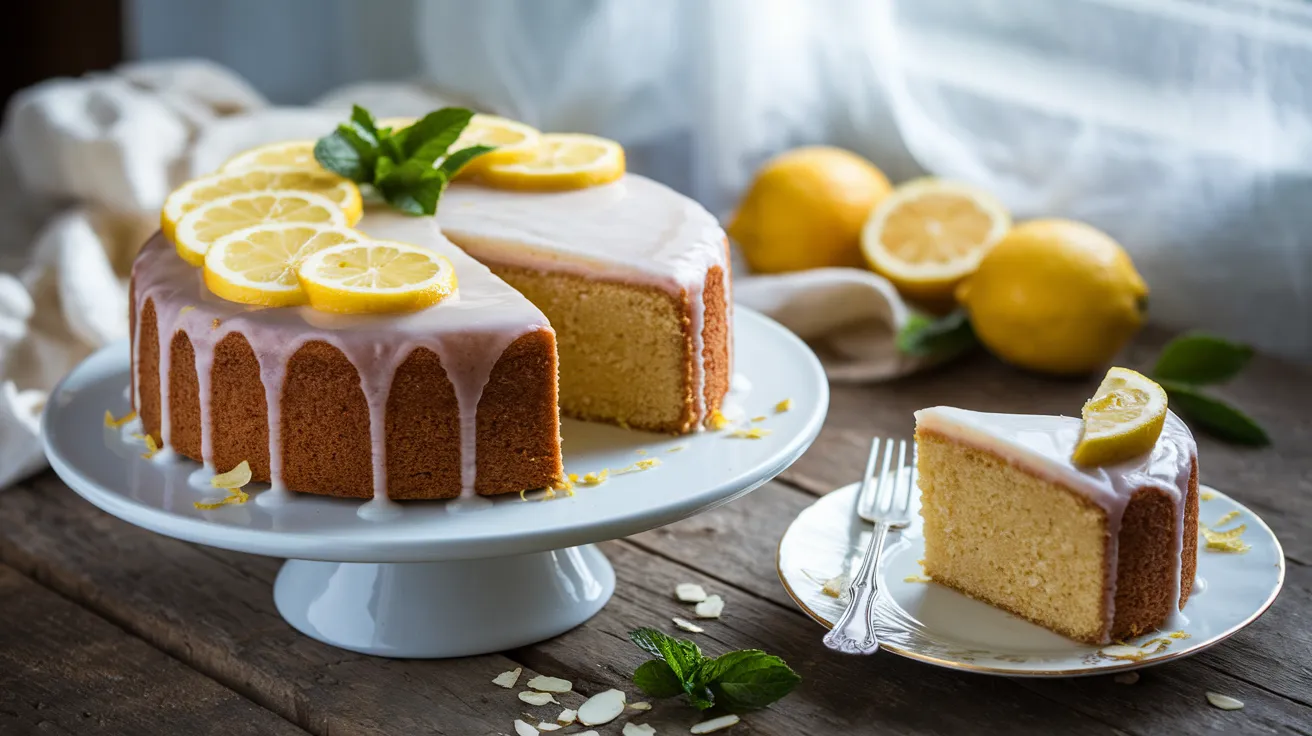
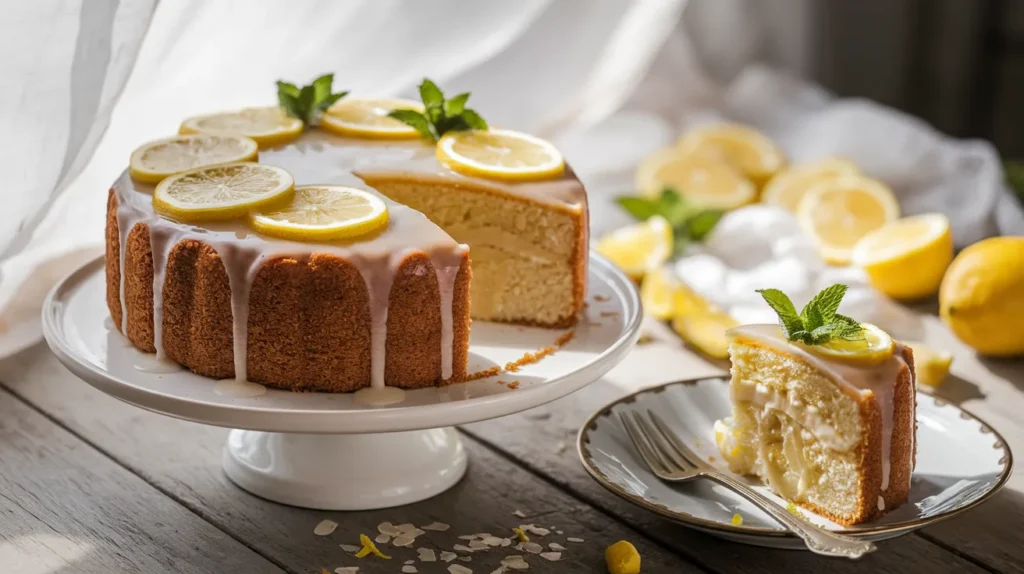
This almond flour dessert combines rich, nutty flavor with a tender, moist crumb that melts in your mouth. Our almond flour lemon cake delivers bakery-quality results using simple pantry ingredients and foolproof techniques that guarantee success every time.
SERVES: 4 | PREP: 15 MIN | COOK: 28 MIN | TOTAL: 43 MIN
Ingredients
Dry Ingredients
| Ingredient | Amount |
|---|---|
| Almond flour (blanched, finely ground) | 2 cups |
| Baking powder | 1 teaspoon |
| Sea salt | ¼ teaspoon |
Wet Ingredients
| Ingredient | Amount |
|---|---|
| Large eggs (room temperature) | 3 |
| Granulated sugar | ½ cup |
| Unsalted butter (melted, slightly cooled) | 4 tablespoons |
| Fresh lemon juice | 2 tablespoons |
| Lemon zest | 1 tablespoon |
| Pure vanilla extract | 1 teaspoon |
Glaze
| Ingredient | Amount |
|---|---|
| Powdered sugar | ¾ cup |
| Fresh lemon juice | 2 tablespoons |
| Lemon zest | 1 teaspoon |
Step-by-Step Instructions
Phase 1: Prep Work (5 Minutes)
Step 1: Preheat and prepare your pan Set your oven to 350°F and position the rack in the center. This placement ensures even heat circulation. Grease an 8-inch round cake pan with butter, then line the bottom with parchment paper. Grease the parchment too. This double-layer protection prevents sticking.
Step 2: Bring eggs to room temperature quickly Place your eggs in a bowl of warm (not hot) water for 5 minutes. Room temperature eggs incorporate better with other ingredients, creating a smoother batter that rises evenly. Cold eggs can cause the melted butter to solidify in clumps.
Step 3: Measure your almond flour correctly Spoon almond flour into measuring cups and level off with a knife. Never pack it down. Almond flour is denser than regular flour, so proper measuring prevents a heavy, dense cake. You want exactly 2 cups for this almond flour dessert.
Phase 2: Mixing Dry Ingredients (2 Minutes)
Step 4: Combine dry ingredients Whisk together almond flour, baking powder, and salt in a medium bowl for 30 seconds. This distributes the baking powder evenly, ensuring your cake rises uniformly. Break up any almond flour clumps with your fingers as you whisk.
Step 5: Check for lumps Run your whisk through the mixture once more, pressing against the bowl sides. Almond flour can form small clumps that create dense pockets in your finished cake. Smooth is what you’re after.
Phase 3: Creating the Wet Mixture (4 Minutes)
Step 6: Zest your lemons first Zest the lemons before juicing them. Zesting a whole lemon is much easier than zesting halves. Use long, gentle strokes and rotate the lemon to avoid the bitter white pith underneath the yellow skin.
Step 7: Beat eggs and sugar Crack eggs into a large bowl and add sugar. Beat with an electric mixer on medium-high speed for 3 minutes. The mixture should turn pale yellow and increase in volume by about double. This creates air pockets that make your almond flour dessert light and tender.
Step 8: Add melted butter slowly Pour melted butter in a thin stream while beating on low speed. Adding it too fast can deflate the eggs you just worked so hard to aerate. Take your time here—about 30 seconds of slow pouring.
Step 9: Mix in lemon and vanilla Add lemon juice, lemon zest, and vanilla extract. Beat on low speed for 10 seconds until just combined. The mixture might look slightly curdled from the lemon juice—this is normal and will smooth out when you add the flour.
Phase 4: Combining and Baking (3 Minutes Prep + 28 Minutes Baking)
Step 10: Fold in dry ingredients Add the almond flour mixture to the wet ingredients. Use a rubber spatula to fold gently, scraping from the bottom and turning the bowl as you go. Stop as soon as you see no more dry streaks—about 20 folds total. Overmixing creates a tough cake.
Step 11: Check batter consistency Your batter should be thick but pourable, similar to pancake batter. If it seems too thick, add 1 tablespoon of milk. If you see any dry pockets at the bottom, give it 2-3 more gentle folds.
Step 12: Pour and smooth Pour batter into your prepared pan and gently tap the pan on the counter twice. This releases air bubbles. Use a spatula to smooth the top in a circular motion from the outside toward the center.
Step 13: Bake with visual cues Bake for 28 minutes. At 20 minutes, check the color—it should be turning golden. At 25 minutes, the edges should pull slightly away from the pan sides. At 28 minutes, insert a toothpick in the center. It should come out with just a few moist crumbs, not wet batter.
Safety Tip: Almond flour browns faster than regular flour. If the top is browning too quickly at 15 minutes, tent loosely with foil.
Phase 5: Cooling and Glazing (15 Minutes)
Step 14: Cool properly Remove the cake from the oven and let it sit in the pan for 10 minutes on a wire rack. This resting time lets the structure set. If you unmold too early, the cake can break apart. After 10 minutes, run a knife around the edges and invert onto the rack.
Step 15: Peel the parchment Carefully peel off the parchment paper while the cake is still warm. If it sticks, let the cake cool for 2 more minutes. The parchment releases more easily when there’s still some warmth.
Step 16: Make the glaze Whisk powdered sugar, lemon juice, and lemon zest in a small bowl until smooth. The glaze should be thick but drizzle-able—if too thick, add lemon juice by the ½ teaspoon. If too thin, add more powdered sugar.
Step 17: Glaze while slightly warm Wait until the cake is barely warm to the touch (about 5 minutes after unmolding). Pour glaze over the center and let it naturally drip down the sides. Glazing a warm cake helps it soak in slightly, creating extra moisture.
Chef’s Notes
Note 1: Blanched almond flour is key for this almond flour dessert. Regular almond meal (with skins) creates a grainier texture and darker color that doesn’t work well for delicate cakes.
Note 2: Store almond flour in your freezer. It contains natural oils that can go rancid at room temperature. Frozen almond flour stays fresh for 6 months and doesn’t need thawing before use.
Note 3: The lemon juice reacts with the baking powder to create lift. This chemical reaction starts immediately, so work quickly once you combine wet and dry ingredients. Don’t let the batter sit.
Note 4: This cake tastes even better the next day. The almond flour continues absorbing moisture as it sits, creating an even more tender crumb. Plan ahead if you can.
Nutrition Facts (Per Serving)
| Nutrient | Amount |
|---|---|
| Calories | 385 |
| Protein | 11g |
| Carbohydrates | 34g |
| Fat | 24g |
| Fiber | 4g |
| Sugar | 25g |
Creative Variations
Chocolate Chip Almond Flour Dessert Fold ½ cup mini chocolate chips into the finished batter. The smaller chips distribute better throughout almond flour batters. If you love rich chocolate treats, try our chocolate mousse for another gluten-free option.
Orange Cardamom Version Replace lemon with orange zest and juice, and add ½ teaspoon ground cardamom to the dry ingredients. This Middle Eastern-inspired twist brings warm, aromatic notes that pair beautifully with almond flour’s natural sweetness.
Berry Topped Cake Skip the glaze and top with fresh berries and whipped cream. Mix 1 cup of sliced strawberries with 1 tablespoon sugar and let sit for 15 minutes to create a natural syrup.
Almond-Apple Crumble Cake Press thin apple slices into the top before baking and sprinkle with cinnamon sugar. For another fantastic fruit-based treat, check out our apple pecan cobbler recipe.
Storage & Reheating
Room Temperature Storage Keep covered at room temperature for 2 days maximum. Almond flour desserts stay moister than wheat flour cakes but can develop an oily surface if left out too long in warm weather.
Refrigerator Storage Wrap tightly in plastic wrap, then aluminum foil. Stores for 5 days. Bring to room temperature 30 minutes before serving, or warm individual slices in the microwave for 10 seconds.
Freezer Storage Wrap unfrosted cake slices individually in plastic wrap, then place in a freezer bag. Freezes beautifully for 3 months. Thaw overnight in the refrigerator or at room temperature for 2 hours.
Reheating Tip Warm slices in a 300°F oven for 5 minutes. This refreshes the texture better than microwaving. Place slices on parchment paper on a baking sheet for easy cleanup.
Troubleshooting Common Problems
Problem 1: Cake is too dense and heavy Cause: Packed almond flour or overmixed batter. Solution: Always spoon and level your almond flour—never scoop directly from the bag. Mix just until combined, no more than 25 folds total.
Problem 2: Cake stuck to the pan Cause: Insufficient greasing or attempting to unmold too soon. Solution: Use both butter and parchment paper. Let the cake cool for exactly 10 minutes, not more or less. Run a thin knife around edges before inverting.
Problem 3: Cake is dry and crumbly Cause: Overbaking or old almond flour. Solution: Check your cake at 25 minutes instead of 28. Almond flour cakes continue cooking from residual heat after you remove them from the oven. Store almond flour in the freezer to keep it fresh.
Problem 4: Top cracked during baking Cause: Oven temperature too high or batter overmixed. Solution: Use an oven thermometer to verify your temperature is accurate. Many ovens run 25°F hotter than displayed. Mix batter gently—aggressive mixing develops too much structure.
Problem 5: Cake tastes bitter Cause: Too much lemon zest or included white pith. Solution: Measure zest carefully—more isn’t better here. Use only the bright yellow outer layer of the lemon skin. The white pith underneath adds bitterness.
Equipment Essentials
- 8-inch round cake pan (metal works better than glass for even browning)
- Electric mixer (hand or stand mixer both work)
- Fine grater or zester (for lemon zest)
- Parchment paper (prevents sticking)
- Wire cooling rack (allows air circulation)
- Rubber spatula (for gentle folding)
- Mixing bowls (medium and large)
- Measuring cups and spoons (dry and liquid)
- Oven thermometer (ensures accurate temperature)
Shopping List
Baking Aisle
- Blanched almond flour (2 cups)
- Granulated sugar (½ cup)
- Powdered sugar (¾ cup)
- Baking powder (1 teaspoon)
- Pure vanilla extract (1 teaspoon)
Dairy Section
- Large eggs (3)
- Unsalted butter (4 tablespoons)
Produce Section
- Fresh lemons (3 medium)
Spices/Seasonings
- Sea salt (¼ teaspoon)
Success Secrets
1. Temperature matters All ingredients should be at room temperature for this almond flour dessert. Cold eggs and warm butter don’t mix well, creating a separated batter that bakes unevenly. Plan ahead by setting everything out 30 minutes before you start.
2. Fresh lemon juice only Bottled lemon juice tastes flat and artificial. Fresh juice provides bright, tangy flavor that makes this cake special. One medium lemon yields about 2 tablespoons of juice.
3. Don’t skip the beating step Those 3 minutes of beating eggs and sugar create the structure for your cake. This is what gives almond flour desserts their lift since they lack the gluten that provides structure in regular cakes.
4. Test your baking powder Drop ½ teaspoon baking powder into ¼ cup hot water. It should fizz immediately. Old baking powder means a flat, dense cake. Replace it every 6 months for best results.
5. Use the toothpick test correctly A completely clean toothpick means your cake is overbaked. You want a few moist crumbs clinging to the toothpick—this ensures a tender, moist cake once it cools.
Pro Tip: Make this almond flour dessert in muffin tins for individual portions. Reduce baking time to 18-20 minutes and you’ll have perfect single-serve cakes for meal prep or entertaining.