
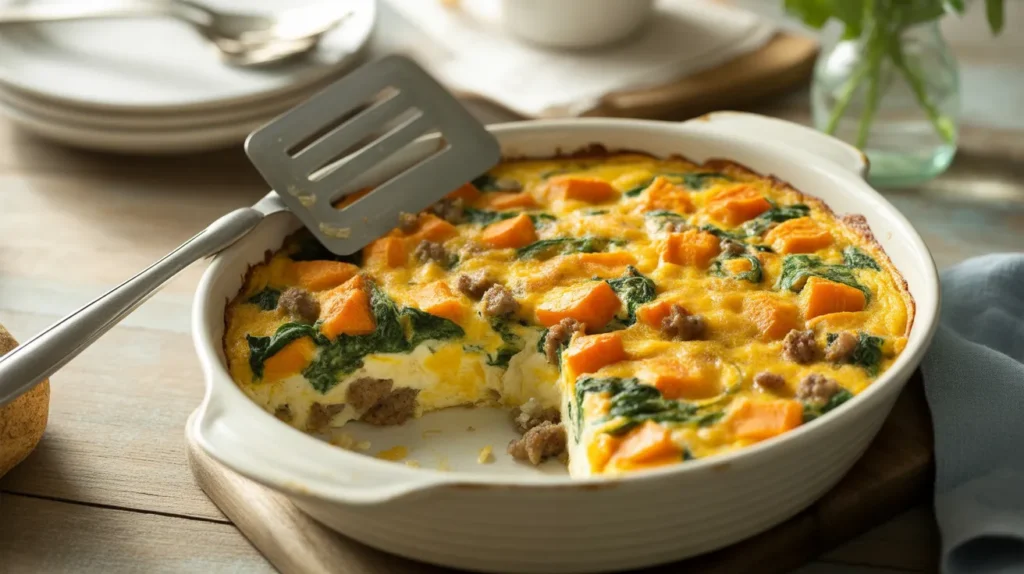
I remember the first time I made this sweet potato breakfast casserole on a lazy Sunday morning. The smell of caramelized sweet potatoes mixed with savory sausage filled my kitchen, and my family came running. This sweet potato breakfast casserole has become our go-to weekend breakfast because it feeds four people perfectly and you can prep it the night before. The best part? Even my picky eaters ask for seconds.
SERVES: 4 | PREP: 20 MIN | COOK: 45 MIN | TOTAL: 65 MIN
Why This Sweet Potato Breakfast Casserole Works
This recipe combines naturally sweet potatoes with savory breakfast sausage and eggs for the perfect balance. You get protein, complex carbs, and vegetables all in one dish. I love that you can customize it based on what you have in your fridge.
The sweet potatoes get tender on the inside while the edges crisp up beautifully. The eggs bind everything together into a cohesive casserole that slices cleanly.
Ingredients for Sweet Potato Breakfast Casserole
For the Sweet Potato Base:
| Ingredient | Amount | Notes |
|---|---|---|
| Sweet potatoes | 3 medium (about 1.5 lbs) | Peeled and diced into ½-inch cubes |
| Olive oil | 2 tablespoons | For roasting |
| Salt | ½ teaspoon | Plus more to taste |
| Black pepper | ¼ teaspoon | Freshly ground |
| Smoked paprika | ½ teaspoon | Adds depth |
For the Egg Mixture:
| Ingredient | Amount | Notes |
|---|---|---|
| Large eggs | 8 | Room temperature works best |
| Whole milk | ½ cup | Or half-and-half for richer texture |
| Sharp cheddar cheese | 1 cup | Shredded, divided |
| Garlic powder | ½ teaspoon | Not garlic salt |
| Onion powder | ¼ teaspoon | Optional but recommended |
For the Sausage Layer:
| Ingredient | Amount | Notes |
|---|---|---|
| Breakfast sausage | 12 oz | Mild or spicy |
| Yellow onion | ½ medium | Diced small |
| Red bell pepper | ½ medium | Diced small |
| Fresh spinach | 2 cups | Packed, roughly chopped |
Step-by-Step Instructions for Making Sweet Potato Breakfast Casserole
Phase 1: Preparing the Sweet Potatoes (15 minutes)
Step 1: Preheat your oven to 400°F. This high temperature helps caramelize the sweet potatoes and develop their natural sugars. Line a baking sheet with parchment paper for easy cleanup.
Step 2: Peel the 3 medium sweet potatoes using a vegetable peeler. Work over a cutting board to catch the peels. Peeling ensures even texture throughout the casserole.
Step 3: Cut the peeled sweet potatoes into ½-inch cubes. Try to keep them uniform in size so they cook evenly. If some pieces are larger, they’ll stay crunchy while smaller pieces turn mushy.
Step 4: Place the cubed sweet potatoes in a large mixing bowl. Drizzle with 2 tablespoons olive oil, ½ teaspoon salt, ¼ teaspoon black pepper, and ½ teaspoon smoked paprika. Toss with your hands until every cube is coated. The oil helps them crisp up.
Step 5: Spread the seasoned sweet potatoes in a single layer on your prepared baking sheet. Don’t overcrowd them or they’ll steam instead of roast. Roast for 20 minutes until fork-tender with golden edges. Set aside to cool slightly while you prepare other components.
Phase 2: Cooking the Sausage Mixture (10 minutes)
Step 6: While the sweet potatoes roast, heat a large skillet over medium-high heat. Add the 12 oz breakfast sausage, breaking it into small crumbles with a wooden spoon. Cook for 5-6 minutes until browned and no pink remains. The fat from the sausage will render out.
Step 7: If there’s excessive grease (more than 2 tablespoons), drain most of it, leaving about 1 tablespoon in the pan. This fat adds flavor but too much makes the casserole greasy.
Step 8: Add the diced onion and red bell pepper to the sausage. Cook for 3-4 minutes, stirring occasionally, until the vegetables soften and the onion becomes translucent. You’ll smell the sweetness developing.
Step 9: Add the 2 cups chopped spinach to the skillet. Stir constantly for 1-2 minutes until the spinach wilts down dramatically. Fresh spinach contains a lot of water, so cooking it beforehand prevents a watery casserole. Remove from heat and set aside.
Phase 3: Assembling the Casserole (10 minutes)
Step 10: Reduce your oven temperature to 350°F. Grease a 9×9-inch baking dish or 2-quart casserole dish with butter or cooking spray. Make sure to coat the corners well so the eggs don’t stick.
Step 11: Layer the roasted sweet potato cubes evenly across the bottom of the greased dish. They should cover the entire base in a mostly single layer. This creates a sturdy foundation for the casserole.
Step 12: Spoon the cooked sausage and vegetable mixture over the sweet potatoes, distributing it evenly. Try to get vegetables in every corner so each serving has variety.
Step 13: In a large bowl, whisk together the 8 eggs, ½ cup milk, garlic powder, onion powder, and a pinch of salt and pepper. Whisk vigorously for 30 seconds until the mixture is completely uniform and slightly frothy. This ensures the eggs cook evenly.
Step 14: Stir ¾ cup of the shredded cheddar cheese into the egg mixture. Save the remaining ¼ cup for topping. The cheese mixed into the eggs melts throughout the casserole, creating pockets of gooey goodness.
Step 15: Pour the egg mixture slowly and evenly over the sweet potatoes and sausage. Use a spoon to gently press down any ingredients that float up. The eggs should almost reach the top of your vegetables.
Step 16: Sprinkle the remaining ¼ cup cheddar cheese over the top. This creates a beautiful golden, cheesy crust when baked.
Phase 4: Baking (45 minutes)
Step 17: Place the casserole on the center rack of your 350°F oven. Bake for 40-45 minutes until the center is set and the top is golden brown. The casserole is done when you insert a knife in the center and it comes out clean, not runny with raw egg.
Step 18: Let the sweet potato breakfast casserole rest for 10 minutes before cutting. This allows the eggs to firm up completely and makes slicing much easier. If you cut it immediately, it will be runny and fall apart.
Chef’s Notes
Texture Control: I like my sweet potatoes with a slight bite, so I roast them for just 20 minutes. If you prefer them very soft, roast for 25 minutes before adding to the casserole.
Cheese Options: Sharp cheddar gives the best flavor, but Monterey Jack, pepper jack, or a Mexican cheese blend all work beautifully. Just like in my sweet potato hash browns, cheese selection changes the entire flavor profile.
Make-Ahead Magic: Assemble the entire casserole through step 16, cover tightly with plastic wrap, and refrigerate overnight. In the morning, remove it 20 minutes before baking to take the chill off, then bake as directed, adding 5-10 extra minutes.
Sausage Alternatives: Turkey sausage works great for a leaner version. You can also use bacon (cook until crisp, crumble, and use 8 slices) or keep it vegetarian by adding mushrooms and extra vegetables.
Nutrition Information (Per Serving)
- Calories: 485
- Protein: 28g
- Carbohydrates: 32g
- Fat: 26g
- Fiber: 4g
- Sugar: 8g
- Sodium: 720mg
Creative Variations for Sweet Potato Breakfast Casserole
Mexican-Inspired Version: Replace the breakfast sausage with chorizo, add 1 diced jalapeño with the peppers, use pepper jack cheese, and top with cilantro, diced avocado, and salsa before serving. This pairs perfectly with the flavors in my sweet potato black bean hash.
Mediterranean Twist: Use Italian sausage instead of breakfast sausage, swap cheddar for crumbled feta cheese (1 cup), add sun-dried tomatoes, and include fresh basil in the egg mixture. Top with a dollop of Greek yogurt when serving.
Veggie-Loaded Version: Skip the sausage and double the vegetables. Add mushrooms, zucchini, broccoli florets, and kale. You’ll need to sauté all vegetables until tender before layering. Add 1 extra egg to help bind everything.
Southern Comfort: Add ½ cup cooked, crumbled bacon, use whole milk in place of regular milk, include 2 tablespoons butter melted into the eggs, and top with shredded Colby Jack cheese and sliced green onions.
Storage & Reheating Guide
Refrigerator Storage: Cool the casserole completely before covering tightly with plastic wrap or transferring to an airtight container. Store for up to 4 days in the refrigerator. The flavors actually improve overnight as everything melds together.
Freezing Instructions: Cut the cooled casserole into individual portions and wrap each piece in plastic wrap, then aluminum foil. Freeze for up to 3 months. Label with the date so you remember when you made it.
Reheating Single Servings: Microwave individual portions on 50% power for 2-3 minutes, checking every minute. This gentle reheating prevents the eggs from getting rubbery. You can also reheat in a 350°F oven for 15-20 minutes covered with foil.
Reheating Whole Casserole: If reheating the entire dish, cover with aluminum foil and bake at 325°F for 25-30 minutes until heated through. Remove the foil for the last 5 minutes to re-crisp the cheese topping.
Troubleshooting Common Sweet Potato Breakfast Casserole Problems
Problem 1: Watery Casserole This happens when vegetables release too much moisture. Always pre-cook vegetables like spinach, mushrooms, and peppers before adding them. These vegetables contain lots of water that evaporates during cooking. Also, make sure your sweet potatoes are roasted, not steamed. If your casserole still seems watery, bake it uncovered for an extra 10 minutes to evaporate excess liquid.
Problem 2: Rubbery Eggs Overcooked eggs turn rubbery and tough. Check your casserole at 40 minutes by gently shaking the dish. The center should jiggle slightly but not be liquidy. Remove it immediately when the center is just set. Remember it continues cooking for 5 minutes after you take it out. Using whole milk instead of skim also helps keep eggs tender.
Problem 3: Soggy Bottom Layer If your bottom layer of sweet potatoes turns mushy, you either didn’t roast them enough initially or added too much liquid. Roast sweet potatoes until they have crispy edges before adding to the casserole. Make sure you’re measuring the milk correctly—too much creates a custard-like texture instead of a firm casserole.
Problem 4: Burned Top Before Center Cooks This means your oven temperature is too high. Always reduce to 350°F after roasting the sweet potatoes. If your top browns too quickly, tent the casserole loosely with aluminum foil for the remaining baking time. Every oven is different, so adjust accordingly. An oven thermometer helps ensure accuracy.
Problem 5: Bland Flavor Breakfast casseroles need assertive seasoning because eggs mute flavors. Don’t be shy with salt and pepper. Taste your egg mixture before pouring it over the vegetables—it should taste slightly overseasoned on its own. Using sharp cheddar instead of mild makes a huge difference. Fresh herbs like thyme or chives added to the egg mixture brighten everything up.
Equipment Essentials
- 9×9-inch baking dish or 2-quart casserole dish
- Large rimmed baking sheet for roasting sweet potatoes
- Large skillet (12-inch) for cooking sausage
- Vegetable peeler for sweet potatoes
- Sharp chef’s knife for chopping
- Large mixing bowl for eggs
- Whisk for beating eggs
- Wooden spoon for breaking up sausage
- Measuring cups and spoons
- Parchment paper for easy cleanup
Shopping List Organized by Store Section
Produce Section:
- 3 medium sweet potatoes
- 1 yellow onion
- 1 red bell pepper
- Fresh spinach (2 cups)
Dairy Section:
- 8 large eggs
- Whole milk (½ cup)
- Sharp cheddar cheese (8 oz block for shredding)
Meat Section:
- Breakfast sausage (12 oz)
Pantry & Spices:
- Olive oil
- Salt
- Black pepper
- Smoked paprika
- Garlic powder
- Onion powder
Success Secrets for Perfect Sweet Potato Breakfast Casserole
1. Room Temperature Eggs: Take your eggs out of the fridge 30 minutes before making the casserole. Cold eggs don’t incorporate as smoothly into the mixture and can create temperature shocks when added to warm vegetables.
2. Uniform Cutting: Cut all your sweet potato cubes the same size. This ensures even cooking and prevents some pieces from being undercooked while others turn to mush.
3. Don’t Skip the Resting Time: That 10-minute rest after baking isn’t optional. The casserole needs time for the eggs to finish setting and the layers to bind together properly.
4. Use Fresh Cheese: Shred your own cheese from a block instead of buying pre-shredded. Pre-shredded cheese has anti-caking agents that prevent smooth melting and can make your casserole grainy.
5. Test Doneness Correctly: Insert a butter knife into the center of the casserole. It should come out mostly clean with perhaps a few moist crumbs, but no liquid egg. The center should wobble just slightly when you gently shake the pan.
This sweet potato breakfast casserole has earned a permanent spot in my weekend breakfast rotation. It’s hearty enough to keep you full until lunch, packed with vegetables, and tastes even better the next day. Make a batch on Sunday and you’ve got breakfast sorted for half the week.