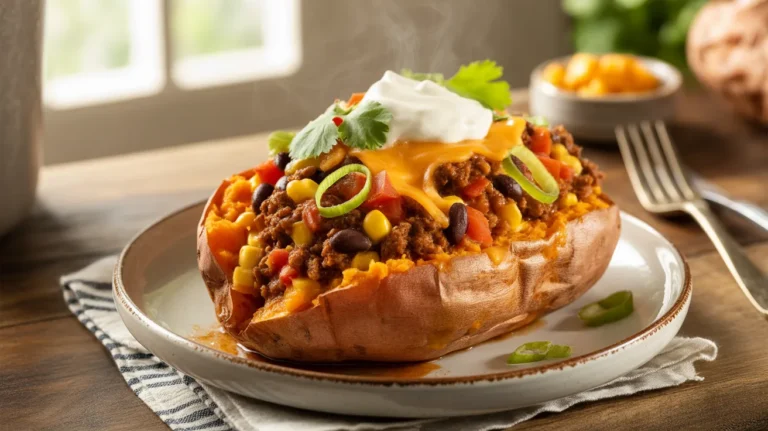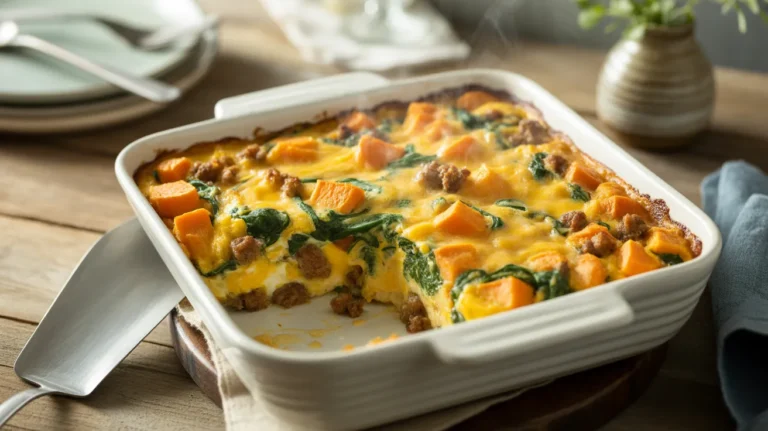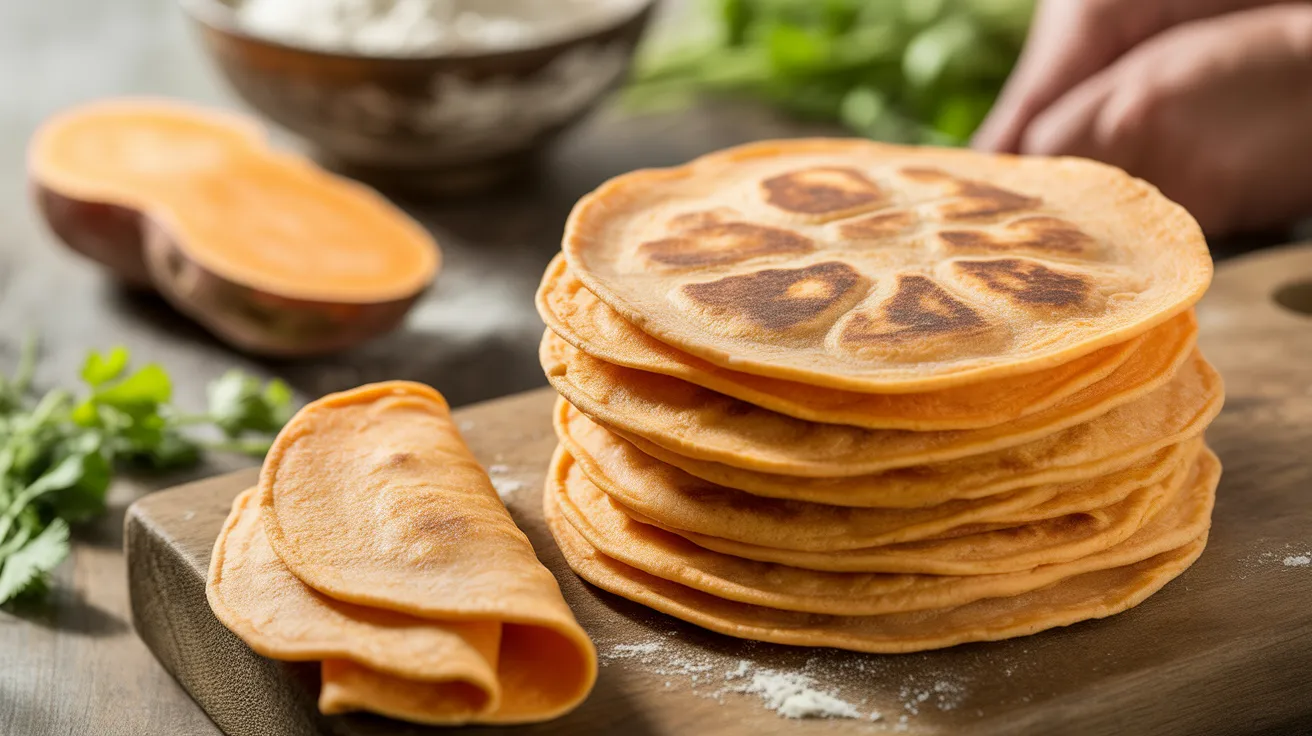
Looking for a healthier twist on traditional tortillas? These sweet potato tortillas are naturally gluten-free, incredibly soft, and packed with nutrients. I’ve perfected this recipe to give you perfectly pliable sweet potato tortillas that won’t crack or tear—ideal for tacos, wraps, or quesadillas.
SERVES: 4 | PREP: 20 MIN | COOK: 25 MIN | TOTAL: 45 MIN
Ingredients
Main Components
| Ingredient | Amount | Notes |
|---|---|---|
| Sweet potato (medium) | 1 cup mashed | About 1 large potato |
| All-purpose flour (or gluten-free blend) | 2 cups | Plus extra for dusting |
| Warm water | ¼ cup | Adjust as needed |
| Olive oil | 2 tablespoons | For dough and cooking |
| Salt | 1 teaspoon | Enhances flavor |
| Baking powder | ½ teaspoon | Creates softness |
Optional Add-Ins
| Ingredient | Amount | Purpose |
|---|---|---|
| Garlic powder | ½ teaspoon | Extra flavor |
| Cumin | ¼ teaspoon | Smoky depth |
Step-by-Step Instructions
Phase 1: Preparing the Sweet Potato Base (10 minutes)
Step 1: Pierce your sweet potato several times with a fork. This prevents steam buildup and allows even cooking.
Place it on a microwave-safe plate and cook on high for 6-8 minutes, flipping halfway through. The potato should feel completely soft when squeezed gently with an oven mitt. If it still feels firm in the center, microwave in 1-minute intervals until tender.
Step 2: Let the cooked potato cool for 3-4 minutes until you can handle it comfortably.
Slice it in half lengthwise and scoop out the orange flesh into a bowl. You want exactly 1 cup of mashed sweet potato—too much will make your tortillas too wet, and too little will make them dry and prone to cracking.
Step 3: Mash the sweet potato thoroughly with a fork until completely smooth and lump-free.
Any lumps will create weak spots in your tortillas that tear easily. I like to press the flesh through the tines of a fork to catch any stringy bits. The texture should resemble thick mashed potatoes with no visible chunks.
Phase 2: Creating the Dough (8 minutes)
Step 4: Add 2 cups flour, 1 teaspoon salt, and ½ teaspoon baking powder to a large mixing bowl.
Whisk these dry ingredients together for 30 seconds. This distributes the baking powder evenly, which helps create those soft, pliable tortillas you’re after.
Step 5: Create a well in the center of your flour mixture and add the 1 cup mashed sweet potato and 2 tablespoons olive oil.
Using a wooden spoon, start mixing from the center outward. The dough will look shaggy and dry at first—this is normal. Keep mixing until the flour begins incorporating into the sweet potato.
Step 6: Add ¼ cup warm water gradually, 1 tablespoon at a time, while continuing to mix.
You might not need all the water, or you might need a touch more. The goal is a dough that comes together but isn’t sticky. If similar to working with dough for sweet potato gnocchi, you want a consistency that’s firm enough to handle but still soft to the touch.
Step 7: Turn the dough onto a lightly floured surface and knead for 3-4 minutes.
Push the dough away from you with the heel of your hand, fold it back over itself, give it a quarter turn, and repeat. The dough should transform from rough and uneven to smooth and elastic. If it sticks to your hands, sprinkle on a bit more flour. When ready, the dough should spring back slightly when you poke it.
Step 8: Form the dough into a ball and cover it with a damp kitchen towel.
Let it rest for 10 minutes. This resting period allows the gluten to relax, making the tortillas much easier to roll out thin without shrinking back.
Phase 3: Shaping and Cooking (25 minutes)
Step 9: Divide your rested dough into 8 equal pieces (about 2.5 ounces each).
Roll each piece into a smooth ball between your palms. Keep the balls covered with your damp towel while you work to prevent drying out. Dry dough edges will create cracky tortillas.
Step 10: Take one dough ball and flatten it slightly with your palm on a floured surface.
Using a rolling pin, roll from the center outward, rotating the dough a quarter turn after each roll. This technique helps maintain a round shape. Roll until the tortilla is about 6-7 inches in diameter and roughly ⅛ inch thick. The edges should be just as thin as the center—thick edges won’t cook evenly and will stay doughy.
Step 11: Heat a dry cast-iron skillet or non-stick pan over medium-high heat for 2-3 minutes.
Test the heat by sprinkling a few drops of water on the surface—they should sizzle and evaporate immediately. Too cool and your tortillas will dry out; too hot and they’ll burn before cooking through.
Step 12: Carefully transfer one rolled tortilla to the hot pan.
Cook for 45-60 seconds on the first side. You’ll see small bubbles start forming on the surface, and the edges will look slightly dry. The bottom should have golden-brown spots but shouldn’t be uniformly dark.
Step 13: Flip the tortilla using a spatula and cook the second side for 30-45 seconds.
The tortilla might puff up slightly—this is perfect! It means steam is creating layers inside, making your tortilla soft and flexible. Press gently with your spatula if you want more even browning.
Step 14: Transfer the cooked tortilla to a plate and immediately cover with a clean kitchen towel.
This steaming step is crucial—it keeps the tortillas soft and prevents them from drying into crispy chips. Stack each new tortilla on top, keeping them all covered.
Step 15: Repeat the rolling and cooking process with remaining dough balls.
As you get into a rhythm, you can roll the next tortilla while one cooks. This speeds up the process significantly.
Chef’s Notes
Moisture Balance: The amount of water you need depends on your sweet potato’s moisture content. Winter squash tends to be drier, so you might need the full ¼ cup of water. Summer potatoes are often wetter, requiring less added liquid.
Flour Choice: All-purpose flour creates the most flexible tortillas, but a 1:1 gluten-free flour blend works beautifully too. Avoid using only almond or coconut flour—they lack the structure needed for pliable sweet potato tortillas.
Even Cooking: Resist the urge to press down hard on your tortillas while cooking. Light pressure is fine, but smashing them makes them dense instead of tender.
Color Variation: Your tortillas will be a gorgeous peachy-orange color thanks to the sweet potato. Don’t expect pure white tortillas—the natural color is part of their appeal!
Nutrition Per Serving (2 tortillas)
- Calories: 285
- Protein: 7g
- Carbohydrates: 52g
- Fat: 5g
- Fiber: 4g
- Sugar: 4g
- Sodium: 620mg
Creative Variations
Herbed Sweet Potato Tortillas: Add 2 tablespoons chopped fresh cilantro and 1 teaspoon dried oregano to the dough. These are fantastic for Mexican-inspired dishes and add a pop of color throughout.
Spiced Southwestern Version: Mix in 1 teaspoon chili powder, ½ teaspoon cumin, and ¼ teaspoon smoked paprika with the dry ingredients. The warm spices complement the sweetness beautifully, similar to how spices enhance sweet potato roti.
Garlic & Onion Tortillas: Add 1 teaspoon garlic powder and ½ teaspoon onion powder to the flour mixture. These work perfectly for savory wraps and quesadillas.
Mini Street Taco Size: Divide the dough into 12 pieces instead of 8 and roll into 4-5 inch rounds. These cook faster (30 seconds per side) and are perfect for authentic street-style tacos.
Storage & Reheating
Room Temperature: Stack cooled tortillas with parchment paper between each one and store in an airtight container or zip-top bag for 2-3 days. They’ll stay soft if properly sealed.
Refrigerator: These keep for up to 5 days when refrigerated. Separate with parchment and seal tightly. Let them come to room temperature before reheating for best texture.
Freezer: Freeze for up to 3 months. Place parchment between each tortilla, wrap the stack in plastic wrap, then place in a freezer bag. Thaw overnight in the fridge before reheating.
Reheating Method: Warm tortillas in a dry skillet over medium heat for 15-20 seconds per side, or wrap a stack in damp paper towels and microwave for 20-30 seconds. The moisture prevents them from drying out.
Troubleshooting Common Problems
Problem: Tortillas Keep Cracking
Your dough is too dry. Add water 1 teaspoon at a time and knead it in until the dough feels soft and supple. Also make sure you’re keeping rolled tortillas covered before cooking—exposed dough dries out fast.
Problem: Tortillas Are Too Thick and Doughy
You’re not rolling them thin enough. Aim for ⅛ inch thickness—they should be almost translucent when held up to light. Use more flour on your rolling surface to prevent sticking, which lets you roll thinner without tearing.
Problem: Tortillas Burn Before Cooking Through
Your heat is too high. Drop the temperature to medium instead of medium-high. The pan should be hot enough to cook the tortillas in about a minute per side but not so hot that they blacken in 20 seconds.
Problem: Dough Won’t Come Together
Your sweet potato might have been too dry. Add warm water 1 tablespoon at a time and keep kneading. The dough should form a cohesive ball that’s slightly tacky but doesn’t stick to your hands.
Problem: Tortillas Turn Out Stiff and Crispy
You’re not covering them after cooking. The steam from stacking hot tortillas keeps them flexible. Also check that you’re using enough sweet potato—1 full cup is essential for that soft texture.
Equipment Essentials

- Large mixing bowl for combining ingredients
- Wooden spoon or sturdy spatula for mixing dough
- Rolling pin for flattening tortillas (a wine bottle works in a pinch)
- Cast-iron skillet or non-stick pan for cooking
- Clean kitchen towels for covering dough and cooked tortillas
- Fork and bowl for mashing sweet potato
- Measuring cups and spoons for accuracy
- Bench scraper or knife for dividing dough
Shopping List By Store Section
Produce
- 1 large sweet potato
Baking Aisle
- All-purpose flour (or gluten-free flour blend)
- Baking powder
- Salt
Oil & Condiments
- Olive oil
Success Secrets
1. Perfect your sweet potato prep. Microwaving is fastest, but oven-roasting at 400°F for 45 minutes creates a slightly drier, more concentrated flavor that makes even better tortillas.
2. Don’t skip the rest period. Those 10 minutes of resting make rolling out the dough significantly easier. Rushed dough fights back and shrinks after rolling.
3. Keep your work surface well-floured. Sticky dough is impossible to roll thin. Dust your surface, rolling pin, and even the top of the dough lightly with flour as needed.
4. Master the heat level. Every stove is different, so pay attention to how your first tortilla cooks. Adjust the heat up or down based on whether it’s cooking too slowly or too quickly.
5. Make a double batch. These freeze so well that you’ll thank yourself later. Separate with parchment, freeze in a bag, and you’ll have homemade tortillas ready whenever you need them.
These sweet potato tortillas are a game-changer for anyone looking for a healthier, more nutritious alternative to store-bought versions. The natural sweetness pairs perfectly with both savory fillings and sweet breakfast spreads. I love making a big batch on Sunday and using them throughout the week for quick lunches and dinners.